
Understanding Charlotte County Releases
A Charlotte County release means one agency ended a specific period of custody. It does not always mean the person walked into the community. Charlotte County Jail may release someone on bond, recognizance, time served, sentence completion, dismissal, or another court order. The jail may also transfer that person to another Virginia jail, the Virginia Department of Corrections, federal custody, or immigration custody. The custody entry must show which event occurred.
Sheriff J. Randy Grissom's official Charlotte County Sheriff's Office site has a jail information page, but it does not provide a current inmate roster or a release archive. That makes a direct custody record more useful than a web search result. Virginia Jail VINE supplies timely local-jail status and notices. Charlotte court records explain the order behind many releases. VADOC, the Bureau of Prisons, and ICE cover different forms of state, federal, and immigration custody. Each system answers only its own part of the question.
- Release
- The end of custody by one named agency, either to the community or to another custodian.
- Discharge
- The completion of a custody or supervision term, as shown by the responsible agency's record.
- Time served
- A sentence satisfied by time already spent in custody, subject to the court order and jail computation.
- Detainer
- A request by another authority to hold or receive a person when the first custody period ends.
Charlotte County Release Types
The release classification points to the next useful record. A bond or recognizance release usually leaves an open court case and may include pretrial rules. A sentence ending in probation moves the question from jail custody to court-ordered supervision. A transfer ends Charlotte County Jail custody but does not end confinement. The table keeps those paths separate.
| Custody event | What it means | Best next source |
|---|---|---|
| Bond or recognizance | Physical jail custody ends while the court case continues. | Jail release entry, bond order, and Piedmont Court Services when assigned |
| Time served or sentence completion | The active local term has been satisfied. | Commitment record, release entry, and sentencing order |
| Probation | The person is in the community under court-set rules. | Court order, Piedmont Court Services, or VADOC District 24 |
| Parole | Conditional release applies to an eligible state sentence. | Parole Board report, VADOC status, and signed release papers |
| Transfer | Charlotte custody ends, but another agency receives the person. | Source-jail entry and receiving agency status |
| Dismissal or court order | The court supplies authority to end custody, unless another hold applies. | Signed order and completed jail release record |
A release reason alone can be incomplete. The destination field matters just as much. If the Charlotte County entry says “transfer,” locate the receiving agency before describing the person as free. If the court grants bond, confirm that the jail finished processing and that no other hold delayed departure.
Charlotte County Release Record Fields
The Sheriff's website does not publish its internal field names. A request should therefore seek existing records and identify the facts needed without demanding a new report. The commitment or custody history, release-log entry, and executed release order may contain different parts of the event. Ask for each by name when the precise release is important.
| Requested field | What it can establish |
|---|---|
| Full name and booking number | Connects the release to the correct booking rather than a similar name. |
| Admission date and time | Defines the custody period that ended. |
| Committing agency and court | Points to the case and legal authority behind custody. |
| Release date and time | Records when Charlotte County custody actually ended. |
| Release type or classification | Distinguishes bond, time served, sentence completion, court order, or transfer. |
| Releasing authority | Identifies the order, court, or legal basis used by the jail. |
| Destination or receiving agency | Shows whether the person entered the community or another custody system. |
| Booking photograph | Identifies the intake image tied to that booking, not proof of guilt or release. |
Some details may be redacted under rules for active investigations, security, medical or juvenile information, sealed records, and court orders. Ask the office to identify the basis for any withheld part and provide all reasonably separable public portions. A booking photo, charge line, or court disposition should never be mistaken for the release timestamp.
Request Charlotte County Release Records
No dedicated online release-record form, posted release-desk email, or local fee schedule was found on the official Sheriff's site as of August 8, 2026. Start with the Charlotte County Sheriff's Office at its official jail page or call 434-542-5141 to confirm where a written Virginia Freedom of Information Act request is currently accepted. Avoid placing sensitive identifiers in an unverified mailbox.
- Identify the person with a full name and only the added identifiers needed to distinguish the booking. Include the booking, arrest, or case number when known.
- Request the existing booking or commitment record, release-log entry, custody history, and executed release order. Specify the admission and release date range.
- Ask for the release date and time, classification, releasing authority, destination, receiving agency, and routine adult booking photograph if maintained and releasable.
- Request electronic copies when practical, a cost estimate before work begins, and the legal basis for each withheld or redacted part.
- Compare the response with the court disposition and any receiving-agency record. Resolve any gap between a court order and the jail's completed processing time.
Charlotte County Sheriff's Office and Jail
222 Law Lane
Charlotte Court House, VA 23923
434-542-5141
Call first to confirm the current request channel and office availability.
Virginia Code § 2.2-3704 generally gives a public body five working days to use one of the permitted response options, with statutory extensions available. The law permits reasonable actual charges. Narrow wording can reduce search time and cost. The agency does not have to answer questions or create a new 24-hour report that it does not keep.
Charlotte County Release Record Law
Virginia FOIA covers public records held by covered public bodies, but criminal-record rules and court confidentiality still apply. Section 2.2-3706 addresses law-enforcement records and requires access to routine adult booking photographs on a proper request, subject to a felony-investigation jeopardy exception and other lawful limits. The image documents intake appearance. It does not prove the case result or release.
Court records follow judicial-record law rather than the ordinary executive VFOIA process. Nonconfidential Circuit Court inspection and copies are governed in part by § 17.1-208. Sealing or expungement may restrict public access to a qualifying record. It does not establish that every independent copy has vanished. Long-term proof is strongest when the jail entry, signed court order, and any VADOC inactive record agree.
Note: A missing online result can reflect system limits, name variation, delay, confidentiality, sealing, or transfer rather than a completed community release.
Charlotte County Bond Release Supervision
Piedmont Court Services is the regional pretrial and local-probation provider for Charlotte County. Its Farmville office may supervise a person released on bond when the court assigns conditions. That is not the same as completing a sentence. The court sets the release terms, Charlotte County Jail records the actual departure, and Piedmont monitors assigned pretrial or local-probation duties.
Use the order and jail record together. A docket may show that bond was granted while another detainer still prevents departure. A jail timestamp may show custody ended but not explain every condition that followed. Piedmont Court Services is at 1012-G West Third Street, Farmville, VA 23901, and its listed telephone is 434-392-8161. It is a supervision provider, not a public inmate locator.
Charlotte Release Counts Need Care
Charlotte County Sheriff's annual reports provide historic arrest activity, not a count of releases. The reports list 372 arrests in 2021, 387 in 2020, and 354 in 2018. Those totals cannot be converted into bookings, people released, average stay, or jail turnover. One person can have more than one event, and an arrest does not reveal the later custody result.
For that reason, the figures should not be labeled as Charlotte County released inmate statistics. A valid release count would require an existing jail report or a carefully scoped data request that defines the date range, event types, duplicate handling, and transfers. An annual arrest report cannot fill those gaps. It is better to omit a release total than give an unsupported estimate.
Find Charlotte County Released Inmates
The best search begins by naming the original custodian. Charlotte County, Virginia can be confused with Charlotte County, Florida, and a state record can be confused with a local jail record. Establish whether the person was held by Charlotte County Jail, another Virginia jail, VADOC, USMS or BOP, or ICE. Then use the matching route.
- Search Virginia Jail VINE by name or booking number for current local-jail status. If release may be upcoming, register for a custody-change alert.
- Contact Charlotte County Jail for the existing release or transfer entry. Ask for the exact time, classification, authority, and destination.
- Review the official Virginia court case for bond, dismissal, sentencing, suspended time, probation, revocation, or another order.
- Search VADOC only when state custody or supervision is plausible. Read the correctional status and location, not just the fact that a name appears.
- Check Board decisions for an eligible parole case, then confirm actual release through VADOC status or signed release papers.
- Use BOP, USMS, or ICE sources only when the case entered the corresponding federal or immigration system.
- Request the local or state record when live systems no longer show the event. A current locator is not a permanent release archive.
A person who leaves one roster may have transferred. Only the release or transfer entry and receiving-agency status distinguish community release from continued custody.
The Released Last 24 Hours route focuses on same-day verification, while this search path follows one named person across all relevant systems. Preserve the agency name, access date, status wording, and official identifier needed for later verification. Avoid saving or sharing personal details that do not serve that purpose.
VADOC Charlotte Release Lookup
The VADOC Inmate and Supervisee Locator covers people currently under state custody or supervision. It can include prison inmates, people assigned to probation or parole districts, some people in local or regional jail beds under VADOC authority, hospital placements, and Community Corrections Alternative Program participants. It is useful after a Charlotte case produces state authority. It is not a history of every former county detainee.
Search with a seven-digit DOC ID for the most precise match. A name search requires the full last name and at least the first three letters of the first name. Location, race, gender, and age-range filters can separate similar results. Accept the disclaimer, complete CAPTCHA, and read the returned correctional status and location. VADOC warns that data updates daily and may still be inaccurate or out of date.
The official VADOC locator shows the search route used for Charlotte County state custody and supervision:
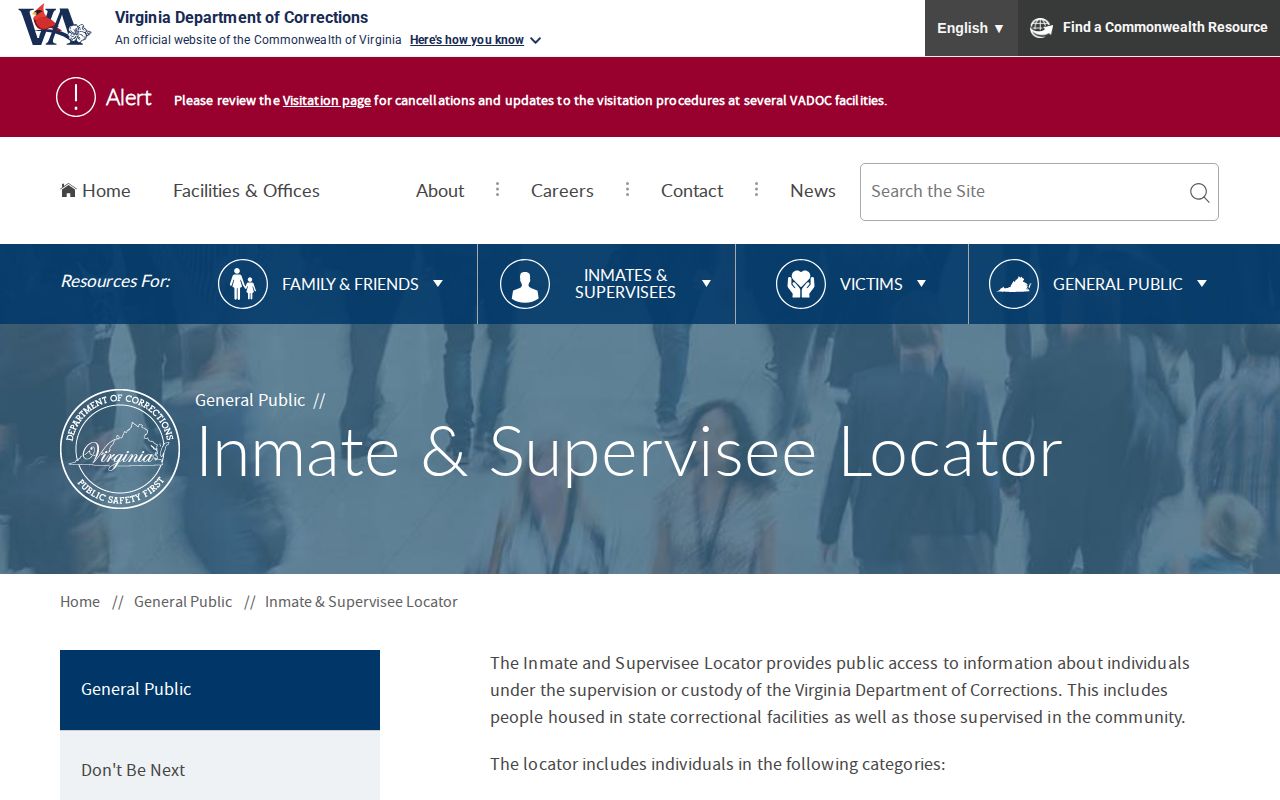
The form's fields help narrow a current state record, but a no-result does not prove discharge. For an inactive record, VADOC procedure points to notarized form 050_F17 and the agency records route.
Charlotte County Release Court Trail
Charlotte General District and Circuit Court functions share 115 David Bruce Avenue, but their records answer different questions. General District Court handles many misdemeanor cases and preliminary felony events. Circuit Court supplies felony trial and sentencing records, appeals, and many sealing or expungement orders. Neither system should be described as the precise jail-door clock.
Start at the Virginia Judiciary Case Status and Information page. Look for the case number, disposition, sentence, suspended time, bond order, probation term, and later revocation activity. When wording matters, request the signed order from the correct clerk. A legal order may precede jail processing, and a second hold can prevent community release after one case ends.
The official court-search choices show why the court and jail records must be reconciled:
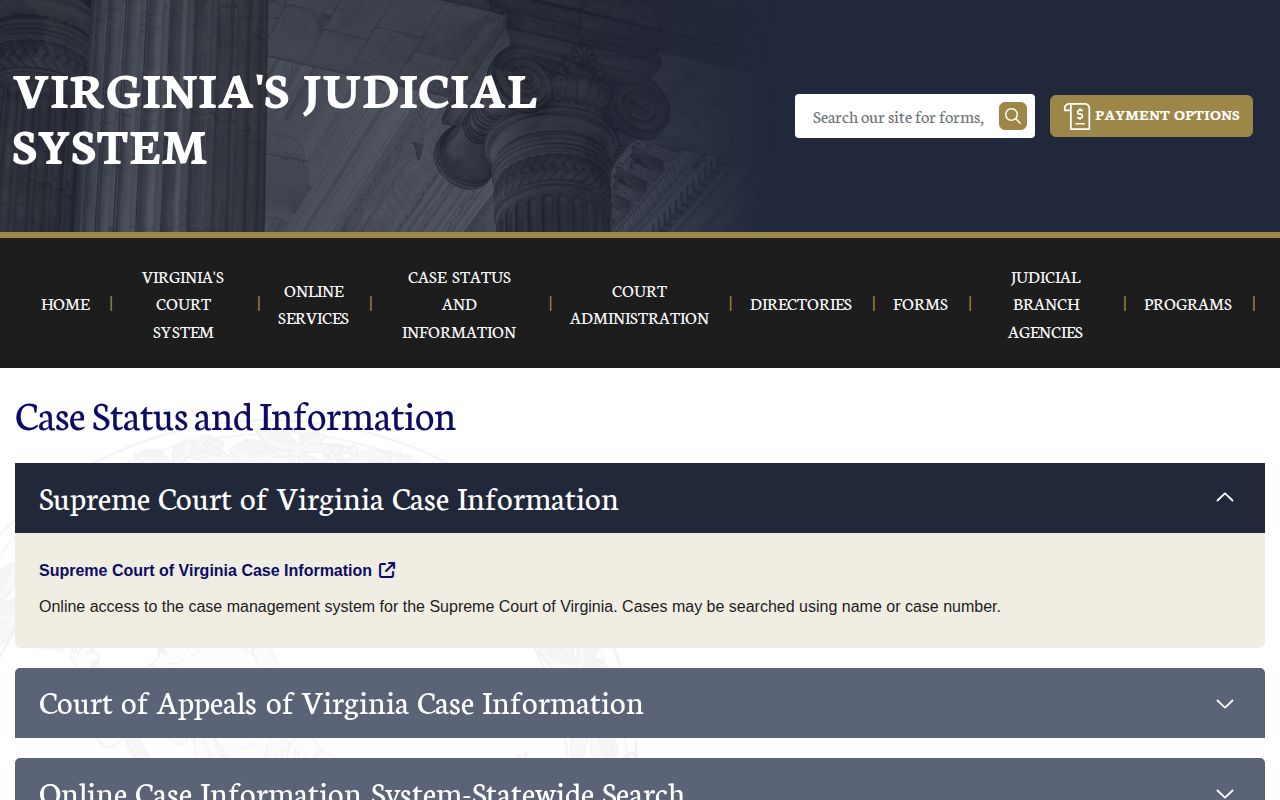
The court result supplies the legal story. The Charlotte County Jail release entry supplies the completed custody event.
Charlotte County Recent Release Options
As of August 8, 2026, the official Sheriff site did not offer a roster, 24-hour list, 72-hour list, release archive, or verified Virginia sheriff app. There is no public cadence, visibility period, or field list to quote. An absent feed is not evidence that no one left custody. It means the event must be checked through other official channels.
For a recent event, use Virginia Jail VINE, call the jail, inspect the court case, and request the existing release-log or custody-history entry if documentation is needed. A VINE notice can report release or transfer events, and bond departure is among the supported local-jail events. When wording or facts are unclear, ask the source jail whether custody ended in the community or at another agency.
Note: Registering with VINE before the event is more reliable than expecting an unspecified released-person profile to remain available afterward.
Charlotte County Release Supervision
A VADOC result that assigns a person to probation, parole, or District 24 can show that the person is in a community-corrections category rather than a prison. It does not mean the sentence or supervision term is fully discharged. District 24 in Farmville serves Charlotte County for state probation and parole. Piedmont Court Services handles assigned local probation and pretrial work through a separate regional office.
The Virginia Parole Board decides eligible parole matters. VADOC officers carry out community supervision. A Board grant authorizes conditional release but does not prove the exact physical departure time. Pair a decision with the VADOC correctional status or signed release document. The Parole / Probation page explains the District 24 and Board verification steps.
Charlotte County Release Notifications
Virginia Jail VINE is the principal fast notice channel for Charlotte County Jail. The state FAQ says it is free, anonymous, available at all hours, and used by every Virginia local and regional jail. Search uses a name and, when known, a booking or offender number. Registration can use phone, text, email, TTY, or in-app delivery.
Local Jail VINE, VADOC NAAVI, and registry notifications do not share one registration. NAAVI serves eligible victims for VADOC events. The Virginia sex-offender registry applies only to people who must register for covered offenses. It is not a general release database. Register separately in each system that actually applies to the case.
The official Virginia VINE FAQ documents local-jail coverage and the release or transfer boundary:
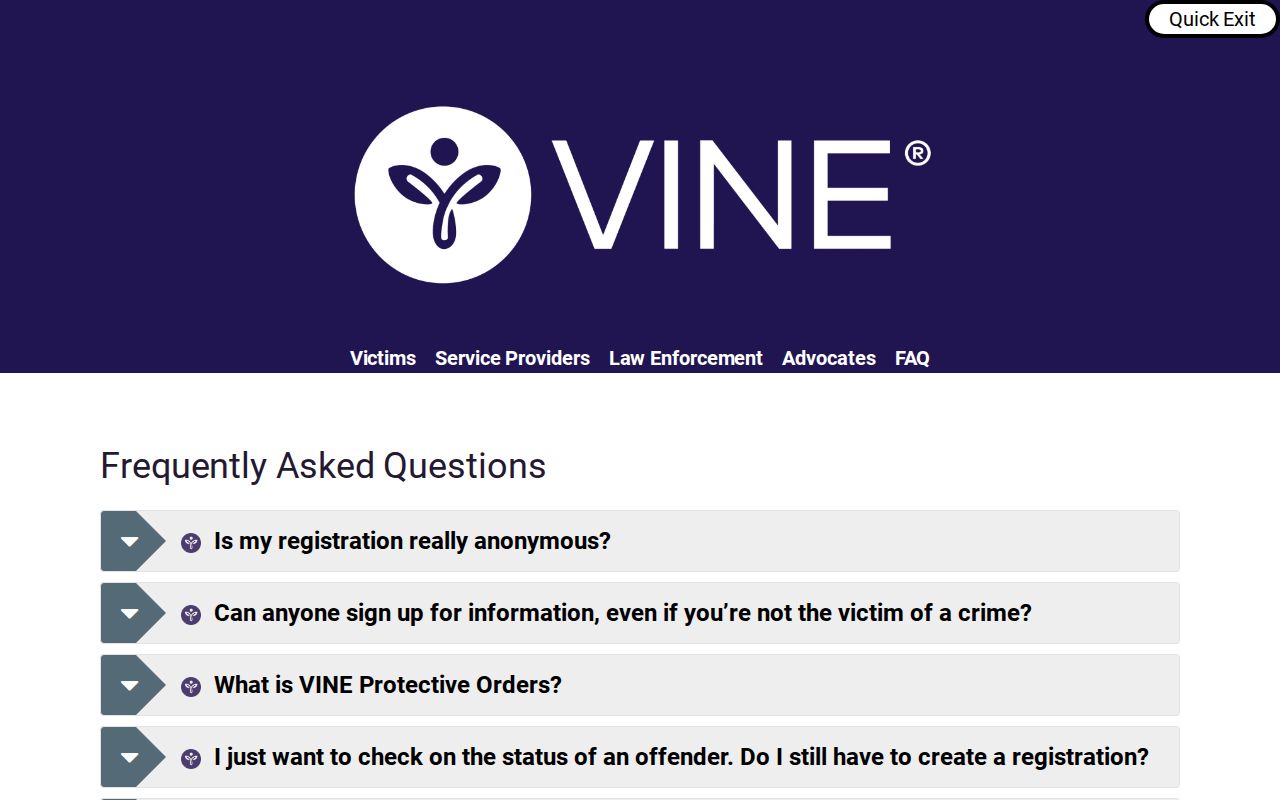
The notice provides a useful timestamp from the source jail. A durable release or transfer record still comes from the jail or the receiving agency.
Charlotte County Federal Release Checks
The BOP Inmate Locator covers federal Bureau of Prisons records from 1982 forward. Results can show a register number, release date, and a location of “RELEASED.” That status means the person is no longer in BOP custody. It does not establish that federal supervised release ended or that another government did not assume custody.
USMS manages many federal defendants before conviction and may use state or local contract beds. It has no public released-person locator and does not routinely publish departure times. Use the federal court docket and, when needed, a specific USMS records request. A BOP no-result is not proof about a person who remained under USMS authority and never entered BOP custody.
Charlotte County ICE Release Transfers
An ICE detainer can change the meaning of a local release. ICE describes it as a request for a local agency to maintain custody for up to 48 hours beyond the ordinary release point so DHS can assume custody. The Charlotte entry may therefore show release to ICE rather than release to the community. The destination or receiving-agency field resolves that distinction.
The ICE Online Detainee Locator can include current detainees and people released from ICE custody within the last 60 days. It accepts an A-number and country of birth or a biographical search, with stated coverage limits. First confirm the Charlotte County custody-ending event. Then use ICE status to determine whether immigration custody continued or later ended.
Charlotte County Custody Record Comparison
No single portal covers every Charlotte County release. A live local-jail service, a state supervision locator, a court docket, and a federal historical locator each have different time spans. Select the source by custodian and by whether the question is current status or a past event.
| Source | Best use | What a gap means |
|---|---|---|
| Virginia Jail VINE | Current local-jail status and registered custody-change alerts | No promised historical archive; confirm through the jail record |
| Charlotte jail entry | Actual end time, release type, and transfer destination | Request the existing record directly because no public feed exists |
| Virginia courts | Bond, disposition, sentence, probation, and signed orders | Online limits or sealing may require clerk contact |
| VADOC locator | Current state custody or community supervision | No result is inconclusive; use an inactive-record request |
| BOP locator | Federal BOP release date and historical status | It does not cover ordinary county or every USMS detainee |
| ICE ODLS | Current ICE detention and limited recent ICE releases | It is not a full immigration-contact archive |
Can a person be released and still appear in a locator? Yes. A person on VADOC parole or probation may remain searchable because the locator includes community supervision. Read the correctional category before deciding whether the result describes confinement.
Charlotte County Jail Release Identity
Charlotte County keeps a small sheriff-operated jail next to the Sheriff's Office. The official page describes capacity for about 65 people. Nearby Piedmont Regional Jail is a separate organization whose listed member counties are Amelia, Buckingham, Cumberland, Lunenburg, Nottoway, and Prince Edward, not Charlotte.
Geography alone should never redirect a Charlotte search to Piedmont Regional Jail. A transfer record can place a specific person in another local or regional jail, but the source-jail entry must support that move. This distinction prevents a common error in generic search results and keeps the release trail tied to the actual custodian.
Charlotte County Release Facilities
The facility path is broader than buildings located inside Charlotte County. It includes the local jail, state authority created by a Charlotte sentence, other Virginia jails that may receive a transfer, and federal or immigration systems when the case supports them. Each page below uses the correct records route for that custody type.
- Charlotte County Jail: request the local release or transfer entry and compare it with VINE and the court order.
- Virginia Department of Corrections institutions and jail beds under VADOC authority: use the statewide locator, signed release papers, District 24 status, or an inactive-record request.
- Other Virginia local or regional jails: confirm the source transfer and the receiving jail through Virginia Jail VINE.
- Federal contract jail beds / U.S. Marshals custody: use the federal docket, USMS records route, and BOP locator only when BOP custody occurred.
- ICE custody after a local release: read the Charlotte destination field and then check the limited ICE locator window.
Note: Charlotte Jail publishes no release-processing hours, public pickup point, or confirmed transit stop, so call before arranging travel or pickup.