
Where VADOC Releases Go
A person leaving VADOC confinement after a Charlotte County sentence may discharge to the community, begin parole, enter probation or post-release supervision, or transfer into another agency's custody. Discharge means the identified term of custody has ended, though a separate sentence, warrant, or detainer can still control what happens next. Parole is conditional community release under state authority. Probation is court-ordered supervision and may follow incarceration or replace some active jail time. These outcomes should not be treated as interchangeable.
VADOC says a person released from a state facility receives paperwork and signs an Order of Release or the applicable probation or parole conditions with a staff witness. Those signed and dated documents show the completed state event more firmly than a date calculated in advance. A person on community supervision may remain in the VADOC locator after leaving a secure institution. That locator presence can therefore support a released-first finding, but it does not mean the full sentence has been discharged.
A VADOC district-office result can mean community supervision, while a prison or jail location means the person remains confined.
Confirm a VADOC Release
The official Inmate and Supervisee Locator is the starting point for current state custody or supervision. It covers VADOC institution inmates, probationers and parolees assigned to district offices, some local-jail prisoners under state authority, institutional hospital placements, and Community Corrections Alternative Program participants. It is not a complete history of every person once held at Charlotte County Jail. VADOC warns that its information updates daily and can still be inaccurate or out of date.
- Open the official VADOC locator and accept its disclaimer.
- Use the seven-digit DOC ID when known. Otherwise, enter the full last name and at least the first three letters of the first name.
- Use location, age range, race, or gender filters only when they help separate similar names.
- Complete the CAPTCHA, then read the reported correctional status and location. Do not rely on the mere presence of a name.
- Record the access date. Treat any future release date as a projection, not proof that departure occurred.
- For actual release, obtain the signed release paperwork or the relevant inactive VADOC record.
The official VADOC locator form is shown below. Its search controls demonstrate why a DOC ID is the strongest search key.
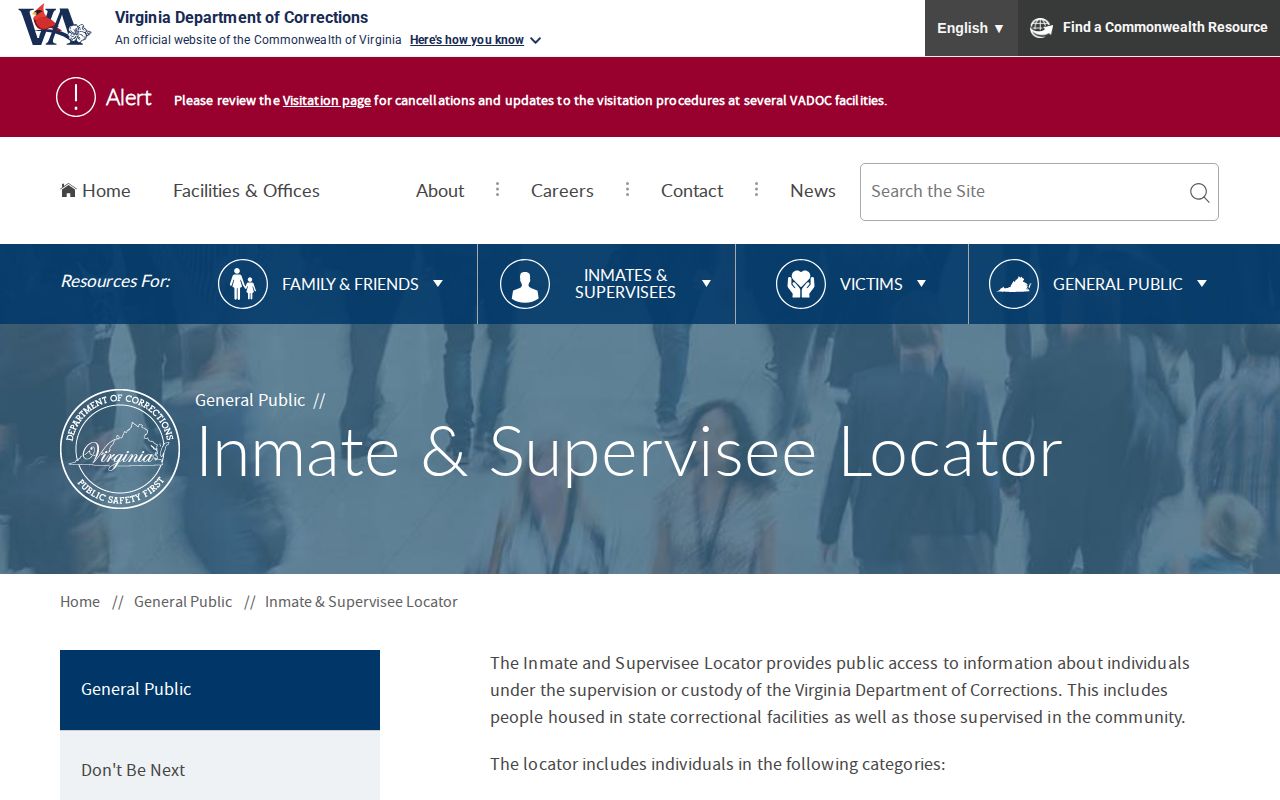
The displayed form is a current-status tool. If no match appears, use court records and the VADOC records route rather than declaring the person discharged.
The broader Charlotte County released inmate search explains when a local jail entry or court order is needed instead of a state result.
VADOC Records and Contacts
A person no longer in a state facility may require an inactive-record request. VADOC Operating Procedure 050.1 identifies a notarized Request for Inactive Inmate or CCAP Probationer/Parolee Records form, numbered 050_F17. A focused request can seek the releasable correctional status, facility history, sentence information, actual release or discharge date and type, and signed release paperwork. VADOC lists a per-copy charge, actual mailing expense, and reasonable archival research labor in that procedure. Request an estimate when the record could be large.
VADOC Correspondence and Central Office
P.O. Box 26963
6900 Atmore Drive
Richmond, VA 23261
Phone: 804-674-3000
Email: docmail@vadoc.virginia.gov
Use the official VADOC Freedom of Information Act route for agency records that are not handled through the inactive-record form. Describe an existing record rather than asking staff to create a new report. Include the DOC ID, full name, date range, and the custody or release event sought. Virginia FOIA allows reasonable actual charges and sets response choices and timing, but criminal, medical, security, sealed, and other protected information can be withheld or redacted.
Charlotte Cases Under VADOC
No VADOC prison was identified inside Charlotte County in the official state facilities directory. Still, a Charlotte prosecution can result in a state-responsible sentence. Legal custody, physical location, and the agency computing time may differ. A person can remain in a Virginia local or regional jail while VADOC calculates a qualifying state term. That person should not be described as serving only a local jail sentence merely because the current bed is local.
VADOC is a statewide correctional system, not Charlotte County Jail. Its locator should be used when a person entered state custody or state community supervision. A short local sentence, pretrial detention, or direct release from the sheriff-run jail may never produce a VADOC record. For those events, Sheriff J. Randy Grissom's Charlotte custody entry and the court case are the better sources.
The court sentence is the best way to identify the governing commitment before choosing a search. Review the active term, suspended time, probation language, and any later correction or revocation. A VADOC result then answers present state involvement, while a Charlotte jail entry answers the local custody event. Keeping those records separate prevents a transfer into state authority from being mislabeled as release to the community.
- State-responsible sentence
- A term for which VADOC has legal and time-computation duties, even if the person temporarily occupies a local jail bed.
- Discharge
- The end of the identified correctional term or authority, distinct from a projected date.
- Supervision
- Community monitoring through probation, parole, or another state corrections category after secure confinement ends.
- Inactive record
- The agency file requested after a person no longer appears in a current VADOC custody or supervision search.
Virginia State Release Computation
The responsible timekeeper depends on the sentence. Local authorities calculate many shorter local terms, while VADOC calculates qualifying state-responsible time. State calculations can include credited jail time, the active sentence, consecutive or concurrent terms, an earning class, offense limits, disciplinary loss, and later court corrections. A parole action or detainer can add another layer. This is why a projected date can move and why a local facility name does not identify the agency that controls the computation.
Virginia uses older Good Conduct Allowance rules for certain offense dates and Earned Sentence Credit rules for many later felony terms. The restrictive credit category can be described only as roughly 85 percent or more of the term, not an exact universal formula. Other credit levels, mandatory minimums, ineligible offenses, class changes, and forfeitures can produce different outcomes. Credit also does not create parole eligibility on its own.
The VADOC time-computation page separates state Good Conduct Allowance and Earned Sentence Credit frameworks.
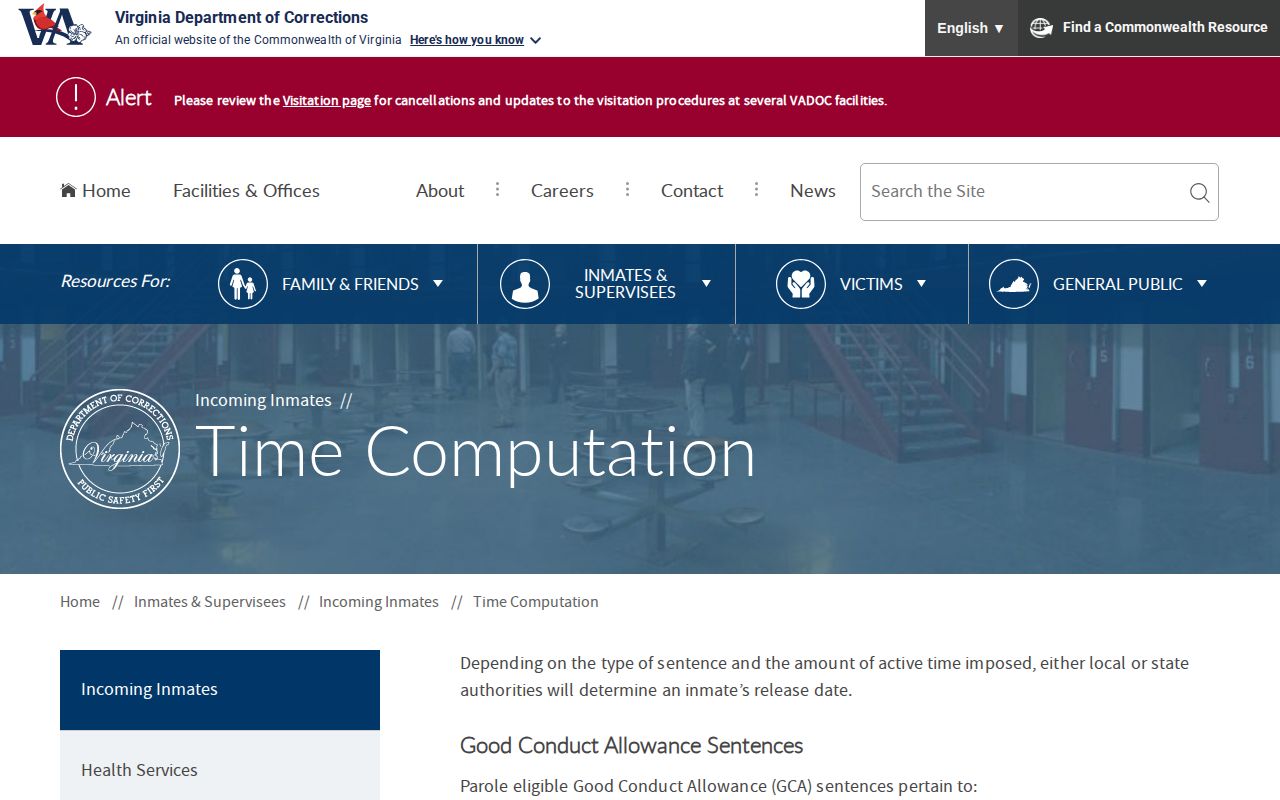
The official explanation supports careful date verification. It does not authorize calculating a Charlotte County release date from a simple percentage.
Charlotte Supervision at District 24
Charlotte County is served by VADOC Probation and Parole District 24 in Farmville. The office also serves Appomattox, Buckingham, Cumberland, and Prince Edward counties. A result assigning someone to District 24 usually places the person in a community-corrections category rather than at a state prison, but it does not prove full discharge. Conditions, warrants, revocation proceedings, or an unexpired supervision term may remain.
VADOC District 24 Farmville
601 Industrial Park Road
Farmville, VA 23901
Phone: 434-392-8671
The VADOC facilities and offices directory identifies the regional office serving Charlotte County.
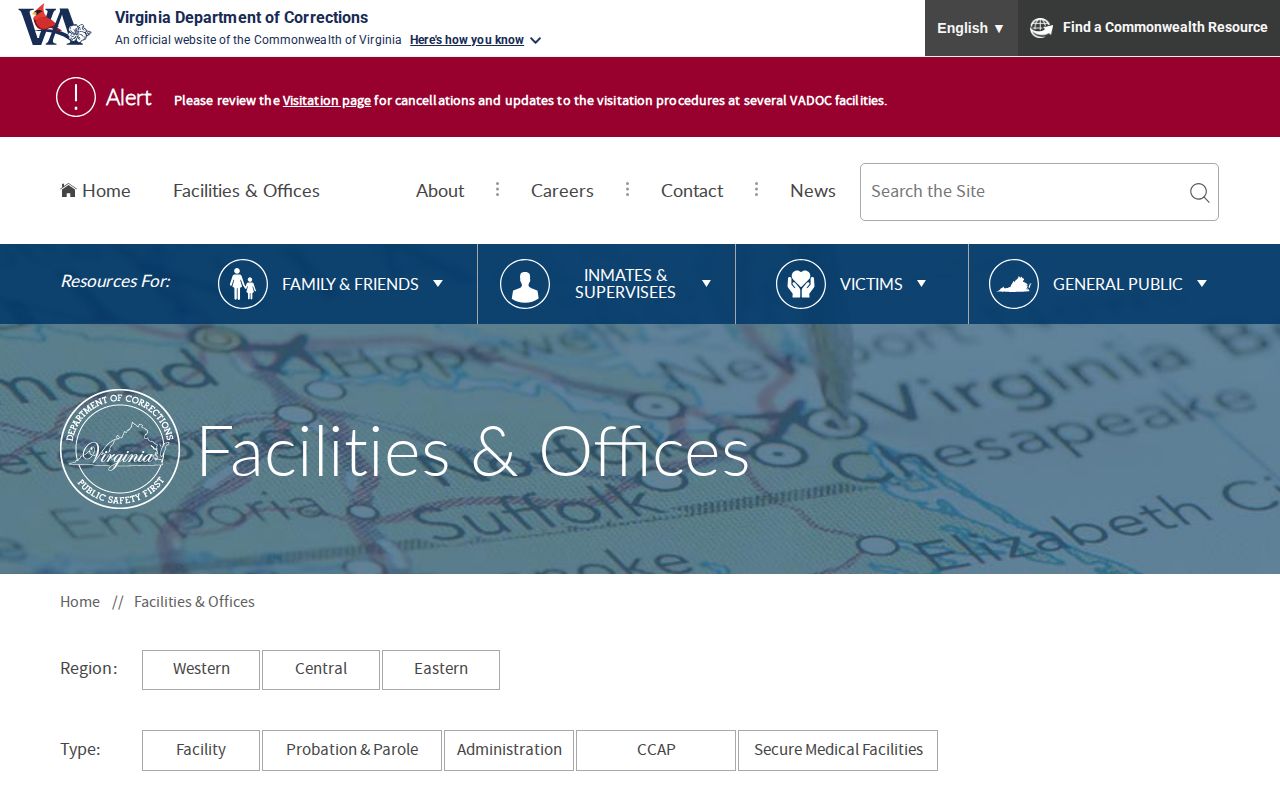
The directory confirms the right regional contact. It should be paired with the locator result or release paperwork, not used as a public list of supervised people.
Charlotte Jail Is Not VADOC
Charlotte retains a small sheriff-operated jail next to the Sheriff's Office. The official jail page describes space for approximately 65 people. That local facility is separate from VADOC, even when a state-responsible prisoner remains there for a time. Nearby Piedmont Regional Jail is also a separate authority. Its six official member counties are Amelia, Buckingham, Cumberland, Lunenburg, Nottoway, and Prince Edward, not Charlotte.
Do not redirect a Charlotte search to Piedmont Regional Jail based on geography alone. An actual transfer entry can place a named person there, but the source jail and receiving jail records must establish it. Likewise, do not apply a VADOC facility release rule to a local Charlotte release. The state rule says a VADOC facility release occurs by the end of the scheduled date, weather permitting. Charlotte County Jail has not published an equivalent local timing rule.
ICE Holds After VADOC Release
A state release does not always mean community release. An ICE detainer may request that a custodial agency continue holding a person briefly past the ordinary release point so federal immigration officers can assume custody. If the VADOC paperwork identifies ICE or another receiving agency, the state term ended but confinement may have continued in a different system.
ICE's Online Detainee Locator covers current detainees and a limited recent-release period. It is not a permanent VADOC history. Read the VADOC release document, the receiving-agency entry, and the ICE result together. The accurate account may be “released from VADOC to ICE,” not “released to the community.”
Note: A transfer ends one agency's custody without proving that the person is free from all confinement or supervision.