
Virginia Jail Releases and Transfers
Charlotte County prisoners can be housed or transported outside the county when a court order, capacity need, security issue, state-responsible sentence, federal matter, or other operational fact requires it. The end of custody at the source jail may lead to the community, another sheriff's jail, a regional jail, VADOC authority, federal custody, or ICE. Each path creates a different record trail.
A source-jail release or transfer entry should identify the date and time, event type, legal authority, and receiving agency when recorded. The receiving jail's current status then shows whether confinement continued. A court order may explain why the move occurred, but it may not state the moment transportation or release processing finished. For a firm account, reconcile all three: the source entry, the receiving record, and the court case.
| Observed event | What it may mean | Best proof |
|---|---|---|
| Released from source jail | Community departure or transfer | Source event type and destination |
| Found at receiving jail | Custody continued under another authority | Receiving facility status |
| No current VINE match | Release, transfer, display change, or search mismatch | Written jail records and court order |
| Court release order | Legal authority to release, subject to other holds | Signed order plus actual jail timestamp |
Confirm a Virginia Jail Release
Virginia Jail VINE is the first statewide check for a person held in a local or regional jail. Official Virginia material says the service covers all local and regional jails in the Commonwealth. It supports searches by name or offender or booking number and can send notices for release, transfer, escape and return, death, and some work-release or home-monitoring events. It does not promise a permanent released-person profile or a fixed post-release retention period.
- Identify the Charlotte County Jail or other facility that first held the person.
- Open VINELink, choose Virginia, and search the full name or known booking number.
- Read the named agency and facility before interpreting the custody event.
- When possible, register before the expected change so the alert preserves its own timestamp.
- Ask the source jail for its release or transfer entry, including the destination and authority.
- Contact the named receiving jail to confirm whether custody continued.
- Check the proper court case for a bond, dismissal, sentencing, transfer, or release order.
A person absent from a current search cannot safely be labeled released. Name variations, an agency transfer, a lag, or the limited nature of a live system can all produce a missing result. The Charlotte County release-record path gives the full fallback sequence for a person whose original custodian is uncertain.
Virginia Jail VINE Coverage
Jail VINE is free, available around the clock, and open to public searches and registrations. Phone, text, email, TTY, and in-app delivery may be selected. A telephone registration uses a four-digit personal identification number. Entering that PIN when an automated notice arrives confirms receipt and ends repeat calls. If a call is unanswered, official instructions say the system can leave a message and retry until confirmation or the retry period ends.
The Virginia VINE frequently asked questions document the statewide local and regional jail coverage and the types of custody events available.
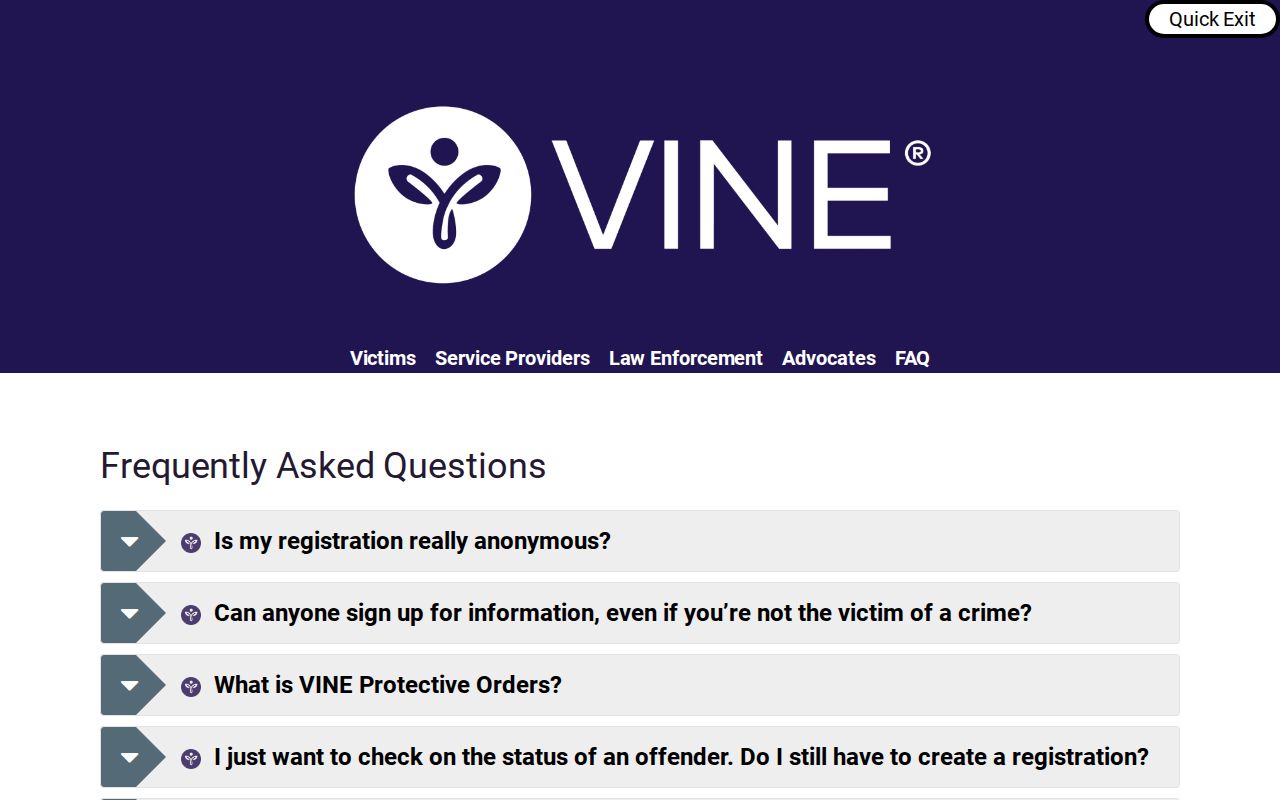
The official coverage makes VINE useful when a Charlotte prisoner may have moved to a jail elsewhere in Virginia. Its alert still needs to be read as the source agency reported it.
The VINELink search interface is the public entry point for a specific-person search and notification registration.
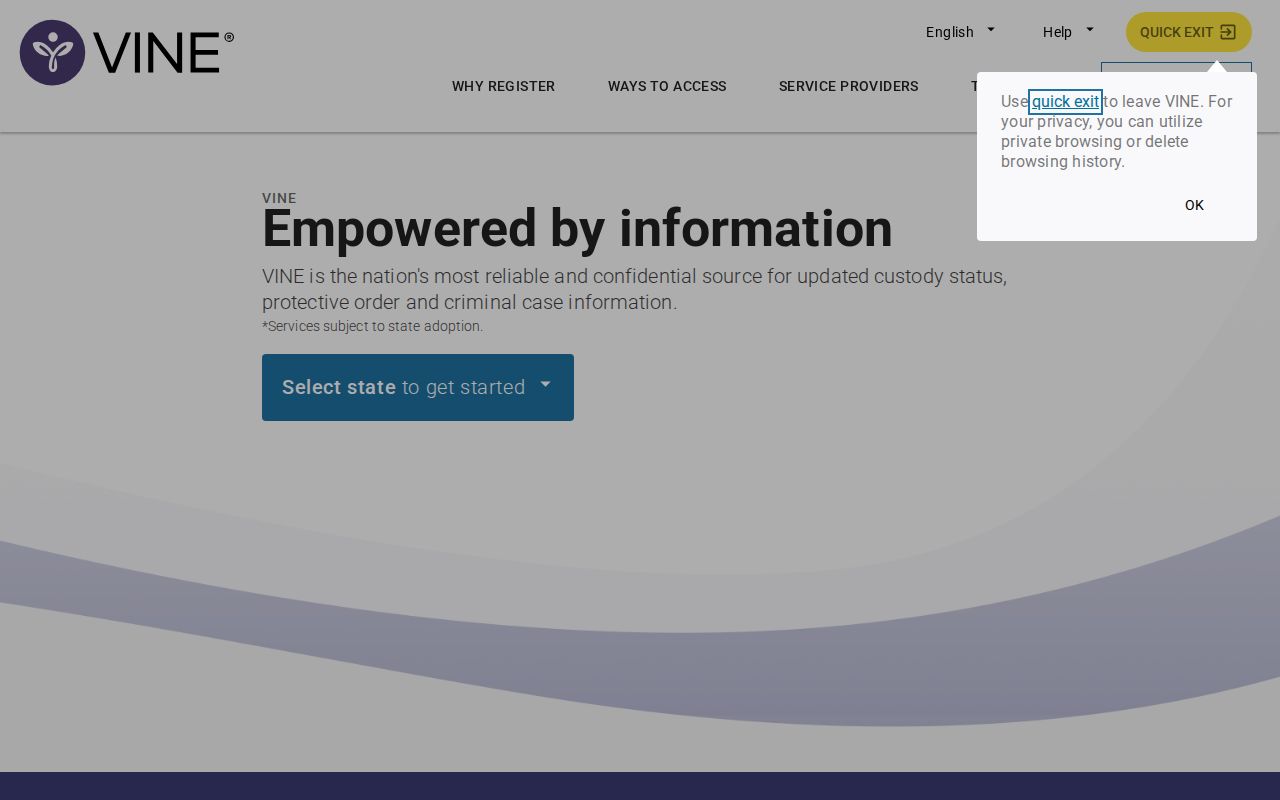
The search screen is not a 24-hour or 72-hour release feed. Charlotte County publishes no such official county list, and VINE does not promise a three-day archive.
Local Jail Records and Contacts
“Other Virginia local or regional jails” is a systemwide category, not one building or operator. Each sheriff or regional jail maintains its own custody records, contact details, and request procedure. Use the facility named in the VINE result, transfer entry, transport paperwork, or court order. No single street address or lobby schedule applies to every facility, so none should be inferred here.
Virginia Jail VINE
Online: www.vinelink.com
Phone: 1-800-467-4943
TTY: 1-866-847-1298
Operators: 24 hours a day
For a written record, ask the source facility for the existing commitment, custody, release, or transfer entry. Give enough detail to locate the booking, such as the full name, date of birth when appropriate, booking date, booking number, and court case number. Request the admission and departure timestamps, event classification, releasing authority, and destination or receiving agency if recorded. Ask for the meaning of any existing code rather than asking staff to analyze events or create a new report.
If the source facility confirms a transfer but does not name the destination, use the court file, transport record, and VINE agency history to narrow the next custodian. Contact facilities one at a time based on an official lead. A broad list of nearby jails is not proof. Record the date, office, and wording of each response so that a later status change does not erase the sequence.
Virginia FOIA generally allows a request for identifiable existing public records and reasonable actual charges. Criminal-law-enforcement, medical, juvenile, security, sealed, and court-protected material may be withheld or redacted. A focused request usually reduces search cost and confusion. Court clerk copies follow court-record law rather than the ordinary executive-branch process.
Charlotte Jail Transfer Boundaries
The Charlotte County Jail is the county's own small sheriff-operated jail. Its official website supplies facility information but no public roster, recent-release database, or release archive. When the jail transfers someone elsewhere, the Charlotte release or transfer entry remains the key starting record because it identifies how Charlotte custody ended and, when recorded, where the person went.
Next, verify the receiving institution. If another local or regional jail accepted the person, use Virginia Jail VINE and that agency's record office. If VADOC assumed legal responsibility, use the state Inmate and Supervisee Locator and VADOC records. If a federal authority took custody, use the federal court or agency route. A person may pass through more than one system, and each agency can accurately say its own custody ended while the person's confinement continues.
- Source jail
- The facility whose custody ended through release or transfer.
- Receiving jail
- The separate local or regional facility that accepted custody.
- Transfer
- A change of custodian, not release to the community.
- Release entry
- The source agency's record of when and how its custody ended.
Piedmont Is Not Charlotte's Jail
Piedmont Regional Jail's official description identifies its six member counties as Amelia, Buckingham, Cumberland, Lunenburg, Nottoway, and Prince Edward. Charlotte is not listed as a member county. Search results that automatically send every Charlotte inquiry to Piedmont erase this jurisdictional difference and can produce a false conclusion.
An actual Charlotte transfer can still place a particular person at Piedmont Regional Jail or another Virginia jail. Geography neither proves nor rules out that move. Sheriff J. Randy Grissom's Charlotte source record must identify the transfer, and the receiving facility must confirm acceptance or current status. Without those facts, describe Piedmont only as a nearby regional jail whose membership does not include Charlotte.
Never treat proximity to Piedmont Regional Jail as proof that a Charlotte County prisoner was housed or released there.
ICE Transfers After Local Release
An ICE detainer may change what appears to be an ordinary local release. ICE describes a detainer as a request that an agency keep custody for up to 48 hours beyond the point when the person otherwise would be released, giving federal immigration officers time to assume custody. A source jail may therefore record a release to ICE even though the person did not enter the community.
When ICE is named as the destination, check the receiving-agency record and the ICE Online Detainee Locator. The locator can include people currently detained and those released from ICE custody within a limited recent period. That window is not a durable local-jail archive. A Charlotte or regional jail timestamp proves only the end of that jail's custody. A later ICE result or immigration release record answers what happened in the federal stage.
Court Records After Jail Release
Charlotte General District and Circuit Court records can explain the legal event behind a transfer or release. General District Court handles many misdemeanor matters and preliminary felony proceedings. Circuit Court handles felony trial and sentencing records, appeals, and sealing or expungement orders. A case may show a bond, dismissal, time-served sentence, suspended time, probation term, revocation, or commitment to state custody.
The court record is not usually the jail-door timestamp. A release order may precede processing, and another hold may prevent community departure. A transfer can occur after sentencing even though the docket does not show the transport time. Match the signed order to both jail records. If an online court search fails, consider name variations, system coverage, clerical delay, confidentiality, or sealing before concluding that no case exists.
Note: Preserve the facility name, access date, booking number, and exact event wording while avoiding unnecessary personal data.