
Charlotte Parole and Probation Compared
Parole and probation both permit a person to live in the community under conditions, but they begin through different legal acts. The Virginia Parole Board decides parole within the groups still eligible under Virginia law. VADOC Community Corrections then carries out supervision. Probation normally comes from a sentencing order. It may follow active incarceration, replace some active time through a suspended sentence, or begin without a prison term. Charlotte County also uses Piedmont Court Services for local probation and pretrial services in covered cases.
A release record proves that one custodian ended custody. It does not prove that all obligations ended. A VADOC locator result assigned to a probation and parole district is consistent with release from secure state custody while supervision continues. A person who finished a short local jail sentence without state supervision may never appear there. The court order remains the best source for the kind and length of probation imposed.
| Point | Parole | Probation |
|---|---|---|
| Authority | Virginia Parole Board for an eligible sentence | Sentencing court |
| Common record | Board report plus VADOC status | Sentencing order plus supervision record |
| Charlotte contact | VADOC District 24 when state supervised | District 24 or Piedmont Court Services, based on the order |
| End point | Formal discharge, expiration, or other authorized end | Court-ordered term ends or the court changes it |
- Parole
- Conditional community release from a sentence for a person who is legally eligible.
- Probation
- Court-ordered community supervision, often linked to suspended incarceration.
- Discharge
- The formal end of custody or supervision, not merely release from a building.
- Absconder
- A supervision status alleging that required contact has been lost. It should never be inferred from a missing search result.
Verify Charlotte Post-Release Supervision
The strongest check uses more than one record. Start with the VADOC Inmate and Supervisee Locator. It covers current state custody and community supervision, including probationers and parolees assigned to district offices. Search by the seven-digit DOC ID when known, or enter the full last name and at least the first three letters of the first name. Filters can narrow a common name. VADOC warns that the locator updates daily and may be inaccurate or outdated, so save the access date and read the reported status and location with care.
Then match that result to the court or Board source. The official Virginia court systems can show sentencing, suspended time, probation, later revocation events, and case disposition. A Board grant shows authorization for parole, not the exact hour the person left custody. Likewise, no locator result does not prove final discharge. An inactive VADOC record request or a signed release document may be needed for an older case.
- Identify whether the person left Charlotte County Jail, another jail, or state custody.
- Search the VADOC locator and record the reported correctional category, office, and access date.
- Review the sentencing order for probation, post-release supervision, suspended time, and the stated term.
- For parole, search the Virginia Parole Board reports by name or DOC number.
- Contact the named supervision office if a current result needs confirmation.
Important: A community-supervision result can mean the person is out of secure confinement but has not completed the sentence.
Charlotte Supervision Is in Farmville
Charlotte County's state supervision office is VADOC Probation and Parole District 24 in Farmville. It is not a counter inside the Charlotte courthouse. District 24 serves Charlotte, Appomattox, Buckingham, Cumberland, and Prince Edward counties. For a person whose current VADOC result points to District 24, this is the regional office that can confirm public supervision information or explain the proper records route.
VADOC District 24 Farmville
601 Industrial Park Road
Farmville, VA 23901
434-392-8671
The official directory image helps distinguish the regional state office from Charlotte's court and jail. View the VADOC facilities and offices source before using the directory.
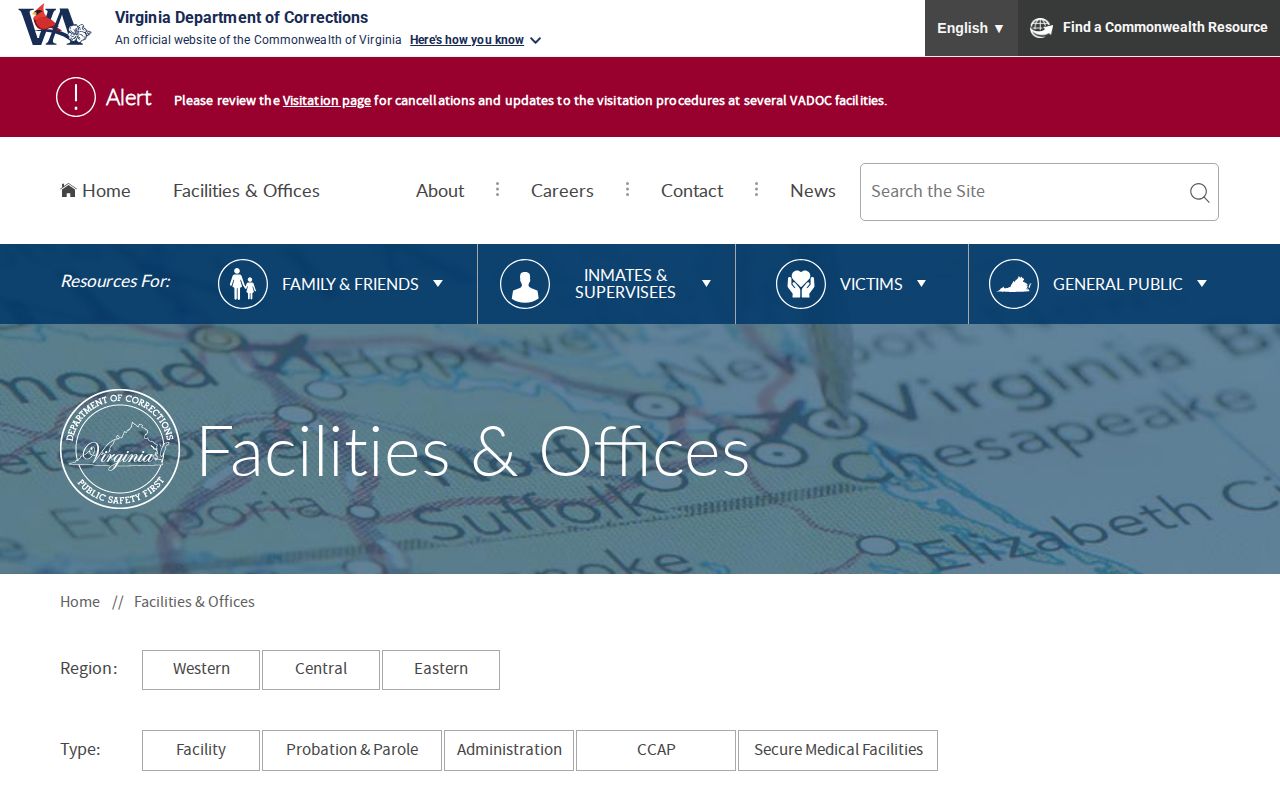
The directory confirms the Farmville office as the relevant VADOC supervision point for Charlotte County, rather than a facility inside the county.
Office staff may limit what they disclose. Ask for the proper public-record channel if confirmation cannot be given by phone. Do not ask staff to interpret an entire case. A DOC number, full name, and the precise status question make the inquiry clearer.
Charlotte Local Probation Records
Not every supervised release belongs to VADOC. The January 2026 Virginia Department of Criminal Justice Services directory identifies Piedmont Court Services as the regional pretrial and local probation provider serving Charlotte County. Its office is at 1012-G West Third Street, Farmville, VA 23901, and its telephone number is 434-392-8161. It is a service and supervision office, not a public list of released people.
This distinction matters after bond. A judge may impose release conditions before trial, Charlotte County Jail records the actual custody-ending event, and Piedmont may monitor compliance. That is not sentence completion and is not parole. Read the bond or release order through the official Virginia court case systems. The Charlotte General District Court commonly handles misdemeanor and preliminary matters, while the Charlotte Circuit Court carries felony trial and sentencing records. Use the jail entry for the date and whether the person went to the community or another custodian.
Is pretrial supervision the same as probation? No. Pretrial supervision applies while a criminal case remains pending. Probation is imposed through a judgment or sentencing order.
Note: The supervising office named in an individual's own paperwork controls if it differs from the usual Charlotte County regional assignment.
Charlotte Parole Decision Records
The Virginia Parole Board has two useful public channels. Its public meetings page carries an event-based calendar, agendas, lists of people to be heard, live meeting links, past dates, and minutes. Its reports archive publishes monthly decision PDFs. The calendar is not fixed to a weekly or monthly cadence, and the Board states that not every parole-eligible person receives a public meeting.
Decision reports may show the DOC number, case type, decision date, result, reasons, jurisdiction, offenses, sentence information, and member votes. Outcomes include grant, not grant, revoke, deferral, and certification. Search likely report months by DOC number when names are common. A grant still needs to be paired with later VADOC status or signed release papers because planning, detainers, and processing can delay physical departure.
The Parole Reports archive is shown below as a source-discovery aid.
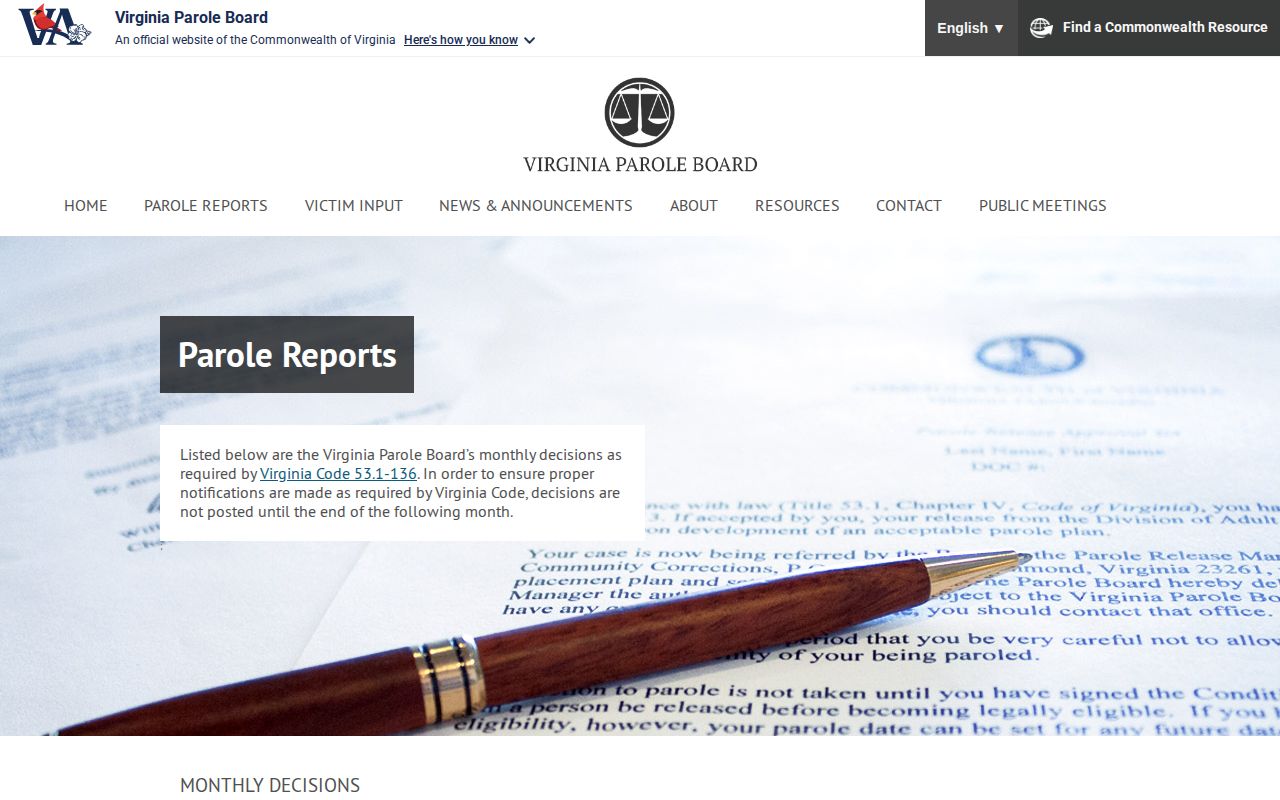
The archive supplies the decision layer, while District 24 or executed release paperwork supplies the later supervision and release layer.
Charlotte Parole Eligibility Limits
Virginia generally abolished discretionary parole for felony offenses committed on or after January 1, 1995. Code of Virginia section 53.1-165.1 also contains current exceptions, including specified jury-sentenced groups and certain people sentenced for juvenile offenses after qualifying time. A broad claim that Virginia has no parole would miss those categories.
For a person still governed by discretionary parole, section 53.1-151 provides eligibility fractions, caps, and special rules. Consecutive sentences aggregate, concurrent sentences use the longest term, and suspended time is excluded from the active calculation. Eligibility is only the point at which the Board may act. It is not a promised release date and does not prove that a person has left custody.
Because sentence dates and statutory exceptions are case-specific, the judgment, DOC computation, and Board record should be read together. The Charlotte County inmate release date page explains how earned credit and other events affect a separate projected date.
Charlotte Supervision Violations and Warrants
Conditions can require reporting, travel approval, treatment, payment, or compliance with other directions in the signed order. The exact terms come from the individual's paperwork. A claimed violation can lead to a warrant, a court hearing, a Board revocation decision, or renewed custody. Revocation means an authority has withdrawn some or all conditional release or suspended liberty after the required process.
No official Charlotte County parole-absconder list was identified. Sheriff J. Randy Grissom's Wanted Persons page is a general law-enforcement channel and must not be treated as a parole list. A person missing from the VADOC locator also cannot be labeled an absconder. Verify an alleged supervision warrant through VADOC, an official court or warrant record, or the Board's monthly report.
Does a Board revoke entry show the current jail? Not by itself. It proves Board action. The VADOC locator, the arresting agency, or a receiving facility must establish current location.
Note: A warrant or detainer can change the result after release, so confirm the latest agency record before relying on an older status.
When Charlotte Supervision Ends
Release from a jail or prison, release to supervision, and discharge from supervision are three separate points. A VADOC result can remain active after the person has returned to the community. Supervision ends only through the legal event that closes the term, such as expiration, a formal discharge, or another authorized order. The court record may show completion or modification for probation, while VADOC maintains the state correctional record.
For an inactive state record, VADOC Operating Procedure 050.1 describes a notarized request using form 050_F17 for an inactive inmate or CCAP probationer or parolee file. Publicly confirmable items can include correctional status and custody or parole status, subject to restrictions. The current locator is not a permanent discharge archive. Older confirmation may therefore require that records process.
The underlying Charlotte release should also be confirmed separately. The Charlotte County released inmate search and records path explains how to pair the jail entry with the court disposition. That pairing prevents a release to probation, a transfer, or a full discharge from being described as if all three meant the same thing.